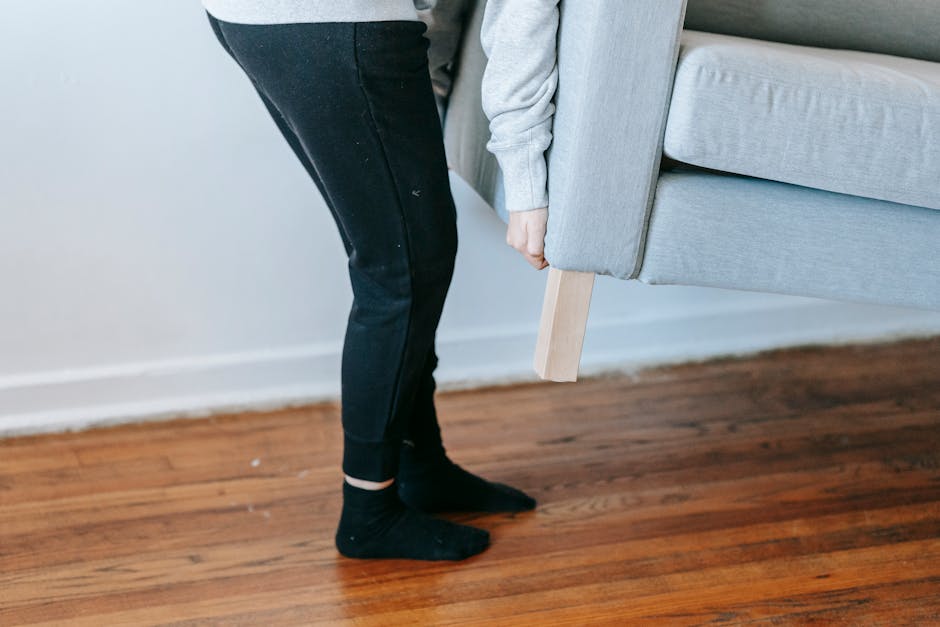
Ergonomic Team Lifting Practices Pros Use Every Day

Anyone who has ever tried to shift a bulky sofa through a tight hallway, or lift a washing machine down a slightly grotty set of stairs, knows the feeling: one wrong move and the whole job turns awkward fast. That is exactly where ergonomic team lifting practices pros use every day make a real difference. They are not flashy. They are not complicated. But they do protect people, save time, and reduce the kind of strain that tends to catch up with you later in the day, or the next morning when your back is complaining in its own quiet way.
This guide breaks down how experienced movers approach team lifting, why the method matters, and how to do it properly in real-world situations. You will find practical steps, common mistakes, a comparison of lifting methods, and a checklist you can actually use. If you are planning a house move, a commercial relocation, or just want a safer way to handle heavy items, this should help.
Why Ergonomic Team Lifting Practices Pros Use Every Day Matters
Team lifting is not simply "two people picking up a heavy thing." Done well, it is a co-ordinated movement system that spreads load, reduces twisting, improves balance, and lowers the chance of injury. Done badly, it is a fast way to strain a shoulder, pinch fingers, or lose control of an item at the worst possible moment. Truth be told, the risk usually appears in the tiny details: one person stepping early, one hand placed badly, one shouted instruction that nobody quite hears.
Ergonomic team lifting practices are especially useful because they recognise that people do not move like machines. Our grip varies. Fatigue builds. Floors are uneven. Doors stick. Hallways turn. In a real house or office, the route is often more awkward than the object itself. That is why pros think about the whole lift, not just the lift.
In practice, this means using body positioning that reduces strain, agreeing a clear plan before the lift starts, and making sure everyone involved knows who is leading. A good lift feels almost calm. There is a rhythm to it. Not perfect, not theatrical - just controlled.
Expert summary: The best team lifting is planned, communicated, and boring in the best possible way. If the move looks dramatic, something probably went wrong.
This matters for home removals, office moves, warehouse handling, furniture pick-up jobs, and any setting where heavy or awkward items are moved regularly. It also matters if you are choosing between doing the job yourself or using a professional service such as removal services or a tailored man and van option.
How Ergonomic Team Lifting Practices Pros Use Every Day Works
At its core, ergonomic team lifting works by reducing physical demand and increasing co-ordination. The team shares the object's weight, but more importantly, shares responsibility for the route, the timing, and the decision to stop if conditions change. That is a big deal. A single person lifting alone has to manage grip, balance, direction, and awareness all at once. A well-run team splits those jobs.
Pros usually start with a quick assessment. What is the item? How heavy is it likely to be? Where are the pinch points? Is there a slope, a tight turn, a flight of stairs, or a narrow lift? Are gloves needed? Do you need a trolley instead? Before anything moves, these questions are answered. Sometimes in ten seconds. Sometimes a bit longer if the stairs look like they were designed by someone who really disliked furniture.
Then comes role assignment. One person may lead the lift, another may guide the back end, and a third may open doors or clear the route. In a moving van setting, this often pairs naturally with unloading sequences, where items are brought off the vehicle in the right order rather than stacked in a panic. It sounds obvious. It rarely feels obvious at 7:30 in the morning when everyone is trying to get the kettle on and the mattress out at the same time.
Communication is the other half of the method. Pros use short, clear phrases such as "ready," "lift," "stop," and "down." They avoid long instructions while carrying weight because the lift itself is not the time for discussion. You do not want a debate about angles while balancing a wardrobe at the top of a staircase.
The ergonomic part also shows up in body mechanics. Straight backs matter, but so does the whole chain of movement: feet positioned for stability, load kept close to the body, knees bent rather than the waist, and turning done with the feet rather than a twist through the spine. Team lifting should reduce awkward reaching, not create more of it.
Key Benefits and Practical Advantages
There are good reasons professional movers rely on ergonomic team lifting every day. The benefits are not abstract, and they are not limited to injury prevention.
- Less strain on individuals: weight is distributed more evenly, which helps reduce overexertion.
- Better control of awkward items: bulky pieces like wardrobes, sofas, or large office desks are easier to stabilise with two or more people.
- Safer navigation through tight spaces: corners, staircases, and narrow hallways are easier to manage when the team moves in sync.
- Faster job completion: good co-ordination usually saves time, especially on larger moves.
- Lower chance of property damage: fewer bumps against walls, banisters, and door frames.
- Better morale: people feel more confident when they know the lift has been planned properly.
There is also a subtle but important advantage: predictable movement. When a team knows what it is doing, the whole job feels calmer. That matters in live environments like offices, flats with shared entrances, or homes where the kettle is on, the cat has vanished, and someone is still looking for a missing box of chargers.
If you are comparing service options, it may help to look at whether a provider also offers packing and unpacking services or office relocation services, because good lifting practice is often part of a bigger moving system rather than a standalone task.
Who This Is For and When It Makes Sense
Ergonomic team lifting is useful for almost anyone moving heavy or awkward items, but it is especially relevant for:
- home movers handling furniture, appliances, and boxed belongings
- office teams moving desks, chairs, storage units, and IT equipment
- removal crews working in buildings with stairs, lifts, or tight access
- landlords and property managers arranging furniture pick-ups or clearances
- small businesses relocating stock or equipment
- anyone moving items that are too large, too heavy, or too awkward for one person
It makes sense when the load is bulky, unstable, valuable, or likely to shift. A long mirror, a filing cabinet, a drum washer, or a heavy table top can be awkward even when the item is not extremely heavy. That awkwardness is often what causes trouble.
It is less useful for tiny single-person lifts, obviously, and also less useful when the team is not properly briefed. Two people lifting in opposite rhythms can be worse than one person doing the job slowly and carefully. Coordination first. Always.
For many people in London and nearby areas, the need becomes obvious in older properties, narrow stairwells, basement flats, or busy streets where access is tight. In those cases, a moving plan that includes the right vehicle, route planning, and team roles can make the difference between an efficient move and a long, frustrating one. If you are still deciding what type of service suits you, browsing a removal company page can help you compare the general approach.
Step-by-Step Guidance
Here is a practical way pros approach team lifting. Keep it simple. The best systems are usually the least fussy.
- Assess the item and route. Check weight, shape, grip points, and the route from start to finish. Look for stairs, slopes, door widths, clutter, wet floors, and awkward turns.
- Choose the right team size. Two people is common, but some items need three or four. Do not force a two-person lift if the object is clearly too large or too unstable.
- Assign a lead. One person should give simple commands and keep the pace steady.
- Agree the instructions. Use short phrases: "ready," "lift," "walk," "stop," "down." No improvising in the middle unless you really have to.
- Check hand placement. Make sure everyone has secure contact points. Avoid fingers under pinch points and never lift from a weak edge if there is a safer grip elsewhere.
- Lift together. Rise smoothly at the same time. Keep the item close to the body and move in small controlled steps.
- Turn with the feet. Do not twist your torso while carrying weight. Reposition the whole body instead.
- Pause when needed. If the route changes or the load shifts, stop. Reset. A short pause is better than a scramble.
- Set down carefully. Lower the load together on the lead's count, and only when the placement area is clear.
A good rule of thumb: if you are unsure whether the lift is still safe, stop and reassess. That is not weakness. That is competence.
And yes, sometimes the item is simply too awkward for the stairs. In that case, use the right equipment or rethink the route. There is nothing heroic about banging a wardrobe into a bannister and calling it a strategy.
Expert Tips for Better Results
Small improvements matter here. These are the details experienced movers tend to care about, because they save energy and prevent the sort of problems that can ruin an otherwise good day.
Keep the load close
The closer the item stays to the body, the easier it is to control. Extending arms increases leverage and strain. It also makes it harder to react if the item shifts suddenly.
Move at the pace of the slowest safe step
This is not about being slow for the sake of it. It is about finding a pace the whole team can maintain without rushing. If one person is still adjusting while another has already moved, you will feel the wobble immediately.
Use the route before you use strength
Sometimes a better path is more valuable than another pair of hands. Open doors in advance, remove small obstacles, and protect fragile surfaces. A few minutes of route prep can save a lot of lifting effort.
Protect your grip
Dry hands, gloves with decent grip, and clean handles all help. Slightly sweaty palms on a glossy cabinet edge are nobody's favourite moment, to be fair.
Plan for the set-down
People focus on the lift and forget the landing. Make sure the destination is clear, ready, and measured. Is there room to pivot? Can the item be placed without another move straight away? Think a step ahead.
Use micro-breaks on long jobs
On bigger moves, fatigue becomes the hidden risk. Short pauses between loads help maintain posture and focus. That is especially useful in multi-storey flats or larger office clear-outs.
When needed, a professional team may also integrate transport support through a moving truck or a smaller removals van, depending on access and volume. The right vehicle and the right lift strategy usually go together.
Common Mistakes to Avoid
A lot of lifting mistakes are very ordinary. That is the point. They do not happen because people are careless in a dramatic sense; they happen because people are rushing, assuming, or trying to be helpful without pausing to think.
- Starting without a plan: no route check, no commands, no lead. That is where most awkward lifts begin.
- Twisting while carrying: a classic one. Turning the torso under load can strain the back and throw the item off balance.
- Talking too much: long instructions while moving a heavy object are usually counterproductive.
- Lifting too fast: speed does not fix poor technique. It usually makes it worse.
- Ignoring fatigue: people get tired, grip weakens, and form drops off. That is normal, but it should be managed.
- Underestimating awkward items: lightweight but bulky items can be harder than dense ones.
- Not clearing the destination: clutter at the landing point causes last-second adjustments, and last-second adjustments are where problems breed.
One of the most common issues, oddly enough, is overconfidence after a few easy lifts. The first three boxes are fine, so the fourth heavy filing cabinet gets treated the same way. That is when the trouble starts.
If a lift feels unstable, do not "just get it done." Reset the plan. The few extra seconds are worth it.
Tools, Resources and Recommendations
Pros do not rely on muscle alone. They use the right tools for the job, and that is part of being ergonomic. Helpful equipment can make team lifting safer and more efficient, especially when items are heavy, oddly shaped, or fragile.
| Tool or Method | Best For | Why It Helps |
|---|---|---|
| Furniture dollies and trolleys | Boxes, cabinets, heavy household items | Reduce manual carrying and keep weight rolling instead of fully supported |
| Shoulder straps or lifting straps | Large furniture and appliances | Improve leverage and spread load across stronger parts of the body |
| Gloves with good grip | Glossy, dusty, or awkward surfaces | Improve hold and reduce slipping |
| Protective blankets and wraps | Furniture, doors, delicate finishes | Reduce knocks, scratches, and the dreaded corner chip |
| Clear route planning | Any move with stairs or tight access | Often more effective than lifting harder |
When choosing a removal partner, it is also sensible to check whether they explain how they manage safety and handling. A company with clear health and safety policy and insurance and safety information is usually taking the job seriously, which is what you want.
You may also want to compare broader move support, such as home moves or commercial moves, depending on whether the lift is part of a domestic or workplace relocation. The practical standards are similar, but the operational pressure can be quite different.
Law, Compliance, Standards, or Best Practice
In the UK, manual handling and workplace safety expectations are taken seriously, and rightly so. Employers and contractors are generally expected to reduce risk where reasonably possible, provide suitable information or training, and avoid unsafe lifting practices. The exact duties depend on the situation, but the direction is clear enough: if a load is too heavy, too awkward, or too risky to move safely by hand, the job should be planned differently.
Best practice usually includes:
- assessing the task before lifting
- using mechanical aids where appropriate
- giving workers suitable instruction and supervision
- avoiding preventable twisting, overreaching, or rushed lifts
- reviewing whether the item should be moved in a different way altogether
For office or business removals, it is sensible to think about risk management in a broader sense too. Door access, lift availability, fire routes, loading bays, and building rules can all affect how lifting is done. In some London buildings, the practical challenge is not the weight itself but the corridor layout, shared access times, or parking constraints outside. That is real life, not a footnote.
If you are a homeowner, the same common-sense approach applies. Good team lifting is not about formal jargon. It is about using care, thinking ahead, and not pretending that a 90kg wardrobe is "probably manageable" just because everyone is trying to be helpful.
Options, Methods, or Comparison Table
Different moving methods suit different situations. Knowing when to use team lifting, when to use equipment, and when to bring in a professional service is part of making the right call.
| Method | Best Use | Strengths | Limitations |
|---|---|---|---|
| Two-person manual lift | Medium-sized furniture or boxes | Simple, quick, flexible | Requires good coordination and suitable item shape |
| Three- or four-person team lift | Large, awkward, or fragile items | More stability, less strain per person | Needs stronger communication and more space |
| Manual handling aids | Heavy appliances, stacked boxes, repeated moves | Reduces physical load, improves efficiency | Not always suitable on stairs or uneven ground |
| Professional removal crew | Full house or office moves, difficult access, long-distance jobs | Experience, structure, equipment, and planning | Costs more than doing it yourself |
For many people, the best choice is a mix. A crew may team lift a heavy sofa, use a trolley for boxes, and load the vehicle in a planned sequence. That layered approach usually works better than trying to force every item into the same method.
Case Study or Real-World Example
Picture a small flat move in west London on a damp morning. Nothing dramatic, just the kind of day where the pavement looks shiny and the stairwell smells faintly of dust and old paint. The main challenge is a wide sofa with a frame that catches at corners. One person tries to pull, another pushes, and the sofa starts to tilt. Not ideal.
Now compare that with a planned team lift. The crew measures the route first, removes a door where needed, and assigns one lead. They use short commands, pause at the stairs, and keep the sofa slightly angled so the arms clear the wall. A third person waits at the landing to guide the turn. It is still work, of course. But the lift becomes controlled rather than improvised.
That is the difference ergonomic lifting makes in ordinary jobs. The item does not magically become lighter. The job becomes smarter.
We have seen similar situations on office moves too, where a storage unit looked simple until it reached a tight reception area. The team that slowed down and re-checked the path usually finished faster than the team that kept pushing forward and had to stop three times to recover from avoidable mistakes. Funny how that works.
Practical Checklist
Use this quick checklist before any team lift. It is simple on purpose.
- Have you assessed the item's weight, size, and shape?
- Is the route clear from start to finish?
- Do you know who is leading the lift?
- Have you agreed the commands you will use?
- Does everyone have a stable grip?
- Is the team size suitable for the item?
- Have you checked stairs, corners, and door widths?
- Are gloves, trolleys, straps, or other aids needed?
- Is the landing area ready and unobstructed?
- Does everyone know when to stop if something feels off?
Quick reminder: If one person is unsure, the lift is not ready yet. Resetting is normal. Rushing is the thing to avoid.
Conclusion
Ergonomic team lifting practices pros use every day are not about showing strength. They are about using judgment, communication, and good positioning so the whole job becomes safer and smoother. When done properly, team lifting protects people, reduces damage, and helps moves stay on schedule without the usual scramble and strain.
Whether you are planning a home move, helping with an office relocation, or just trying to shift one very stubborn item, the same principles apply: plan first, lift together, keep the load controlled, and stop when the situation changes. It sounds basic because it is. Basic done well is often what saves the day.
If you are weighing up whether to handle the job yourself or bring in support, look for a service that treats handling and safety as part of the process, not an afterthought. That kind of care tends to show up everywhere else too.
Get a free quote today and see how much you can save.
Sometimes the smartest move is the quiet one. That is usually the one that gets everyone home with their backs intact and the sofa still looking respectable.
Frequently Asked Questions
What are ergonomic team lifting practices?
They are coordinated lifting methods designed to reduce strain, improve control, and make heavy or awkward lifts safer for everyone involved. The focus is on planning, communication, and body position as much as on strength.
When should you use a team lift instead of lifting alone?
Use a team lift when an item is too heavy, too bulky, too awkward, or too unstable for one person to move safely. Even if the load is not extremely heavy, team lifting can still make sense when access is tight or the item is hard to grip.
How many people should be in a team lift?
It depends on the item. Two people is common for medium furniture, but larger or more awkward pieces may need three or four. The right number is the smallest team that can move the item safely and steadily.
What is the most important rule in team lifting?
Clear communication. If the team does not move at the same time, use the same commands, and stop when needed, the lift becomes unpredictable very quickly.
Should you bend your knees when team lifting?
Yes, in general you should use your legs and keep the load close to your body rather than bending from the waist and twisting. That said, every item and route is different, so the safe technique has to fit the situation.
What are the biggest mistakes people make during team lifts?
The most common mistakes are rushing, twisting while carrying, starting without a plan, and underestimating awkward items. People also forget to clear the landing area, which causes last-second adjustments.
Can team lifting prevent injuries completely?
No method can guarantee that. But good team lifting can reduce risk significantly by improving control, spreading load, and lowering the chance of sudden strain or slips.
Do you need special equipment for team lifting?
Not always, but equipment like trolleys, straps, gloves, and protective wraps can make the job easier and safer. For some items, using the right aid is better than adding more people.
Is ergonomic team lifting useful for office moves?
Very much so. Office furniture, storage units, printers, and other equipment can be awkward to handle, especially in buildings with lifts, shared corridors, or tight access.
How do professionals keep team lifts coordinated?
They assign a lead, agree short commands, check the route in advance, and move at a controlled pace. If anything changes, they stop, reset, and continue only when the lift is safe again.
What if the item is too awkward to carry safely?
Then it should be re-routed, re-planned, or moved with equipment instead of forcing a manual lift. Sometimes the best decision is to change the method, not the effort.
Are there UK safety expectations around lifting?
Yes. In UK workplaces, manual handling should be assessed and managed sensibly, with risk reduced where reasonably possible. In everyday moving jobs, the same best-practice logic applies even when it is not a formal workplace setting.
How can I tell if a removal company handles lifting properly?
Look for clear safety information, sensible planning, and a practical approach to access, route preparation, and equipment use. A company that talks plainly about its process is usually a better sign than one that just says everything is "easy."
What is the fastest way to make a team lift safer?
Slow down just enough to plan the route and assign roles before you start. That small pause usually saves far more time than it costs.